
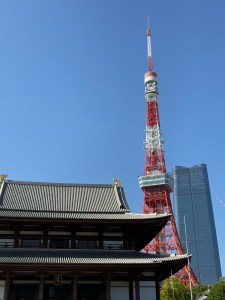
When it comes to iconic structures in Tokyo, Tokyo Tower stands out as a symbol of the city. Its distinctive red color makes it instantly recognizable as a landmark of Tokyo. Built in 1958 as a broadcasting tower, its official name is the “Japan Radio Tower.”
The founder of Tokyo Tower, Hisakichi Maeda, was also responsible for creating the Sankei Shimbun newspaper, Mother Farm, and Boso Agricultural High School (now known as Shorin Junior and Senior High School).
With the switch from analog to digital television broadcasting, Tokyo Tower’s role as a broadcasting tower has since been passed on to Tokyo Skytree.
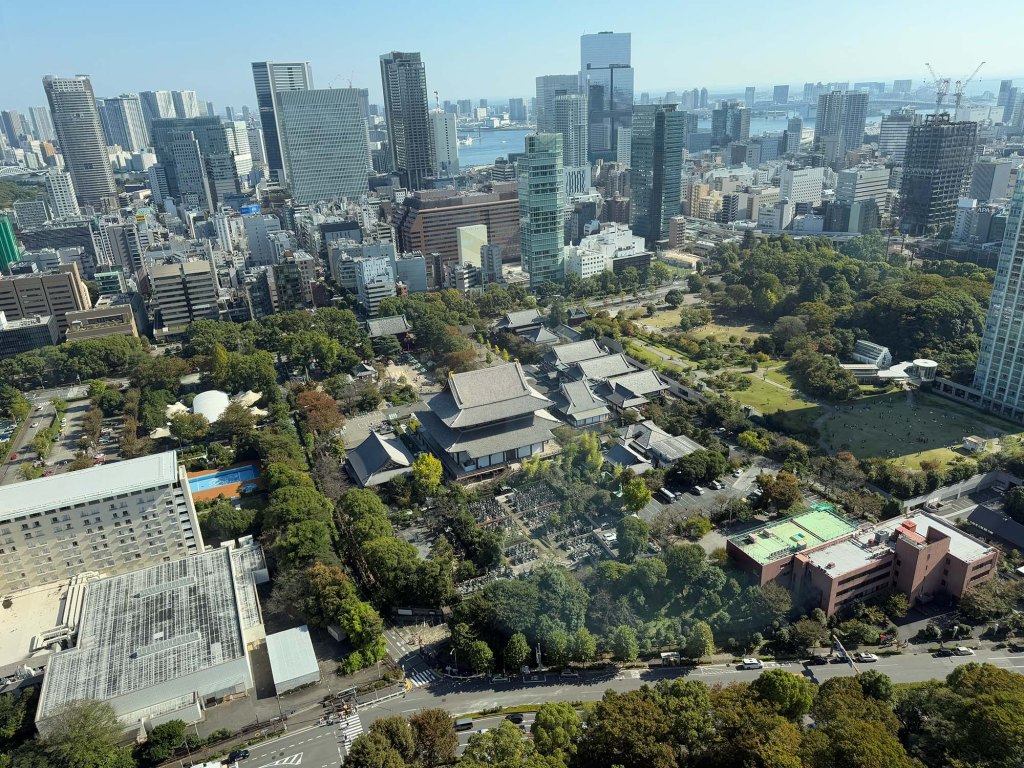
Zojoji Temple is located right next to Tokyo Tower. It is a temple of the Jodo sect, a school of Buddhism, and was originally built in 1393.
Access
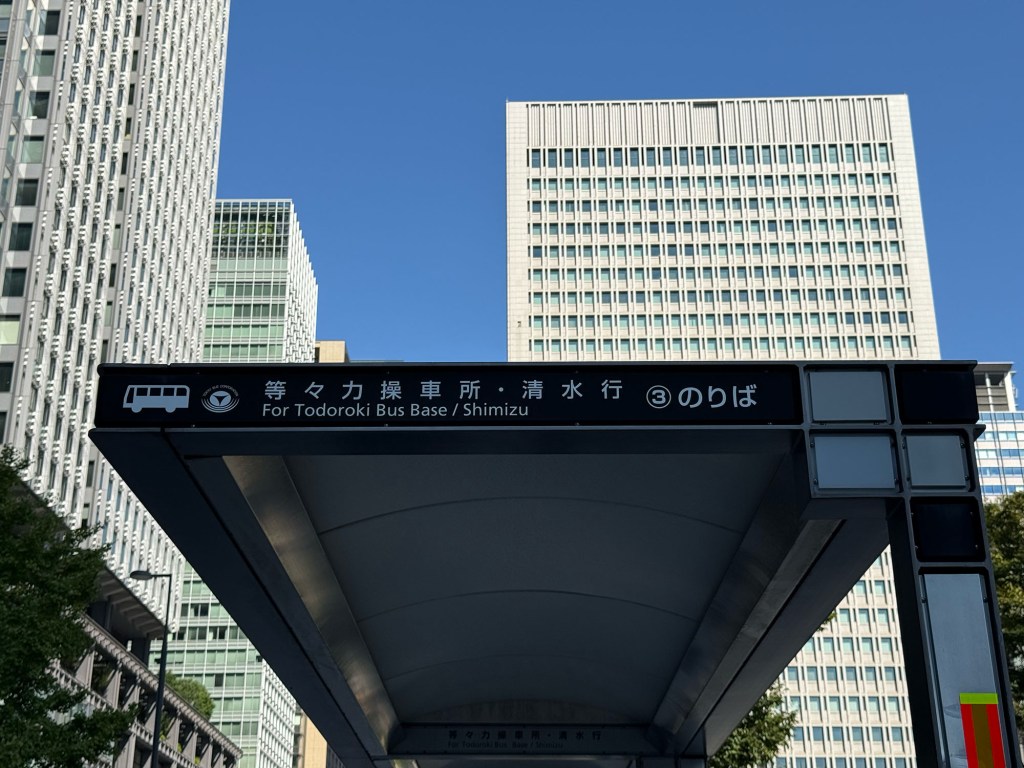
The easiest way to reach Tokyo Tower from Tokyo Station is by bus. Take the bus departing from Stop No. 3 at the Marunouchi South Exit of Tokyo Station.
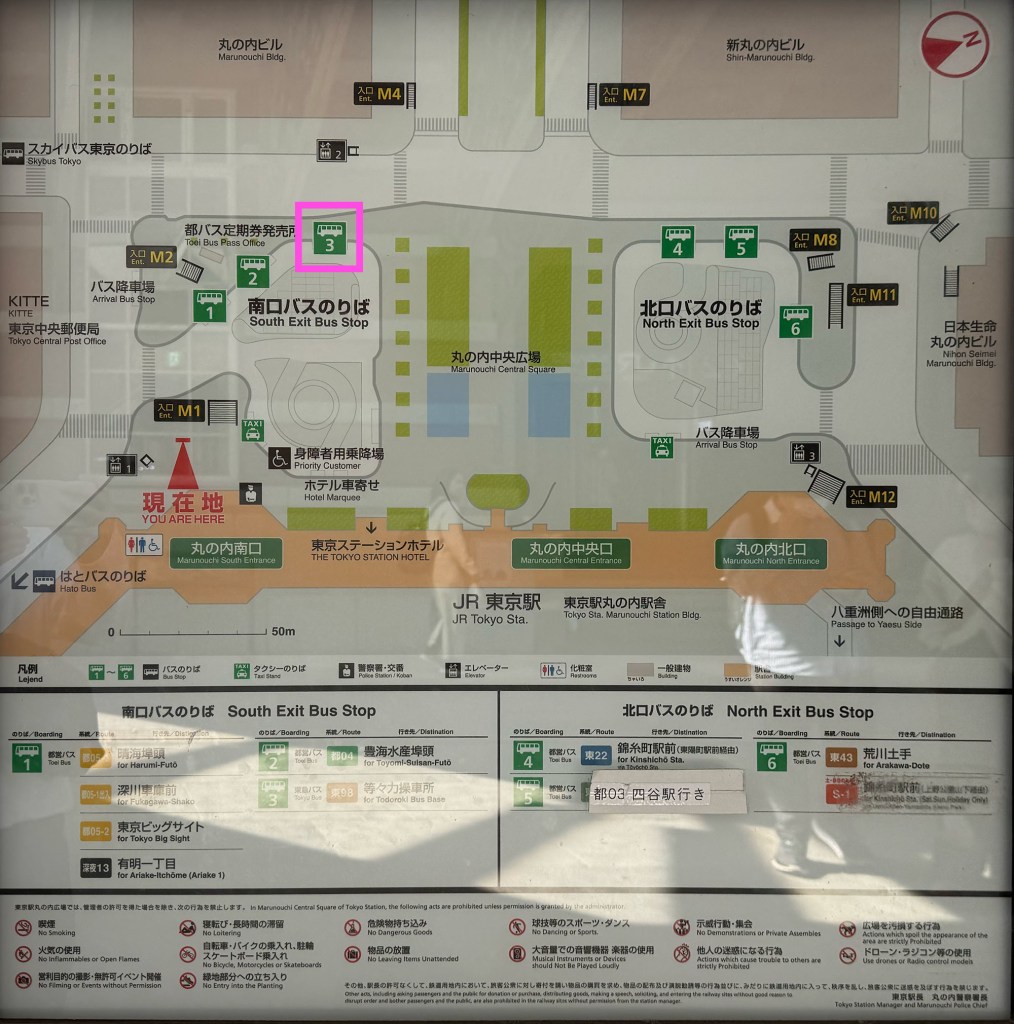
If you prefer to go by train, you can use either the Yamanote Line or the Keihin-Tohoku Line. The Yamanote Line trains are green, while the Keihin-Tohoku Line trains are blue. Both lines depart from platforms 5 and 6. Get off at Hamamatsucho Station. Please note that there is a sensitive statue at Hamamatsucho.
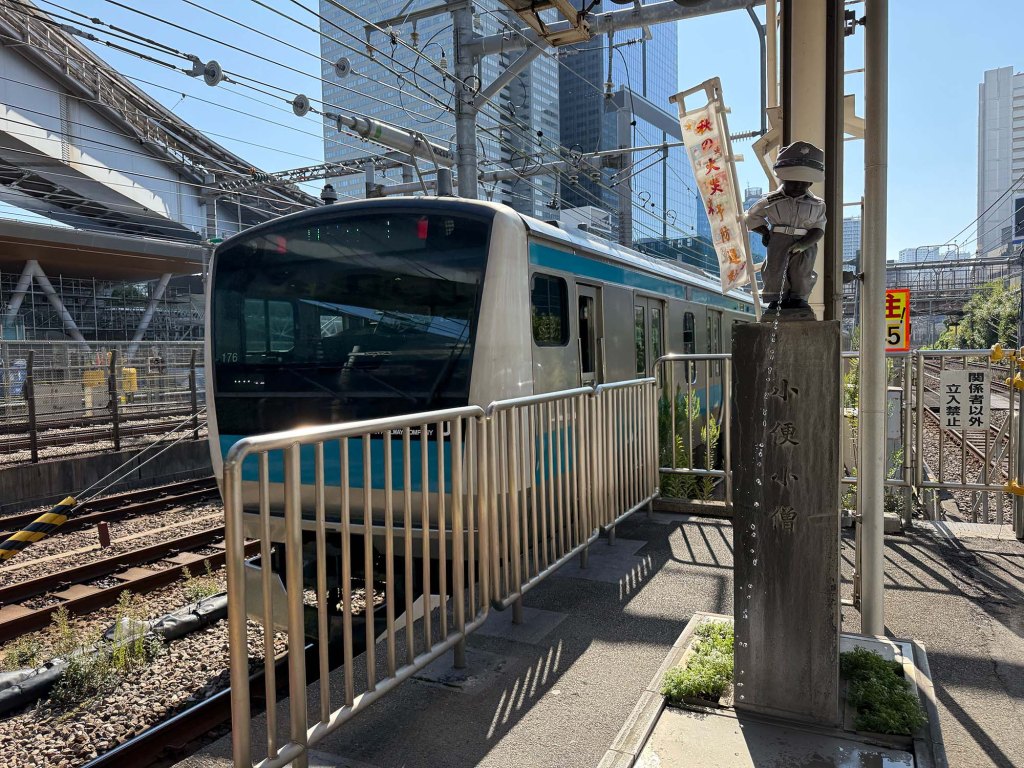
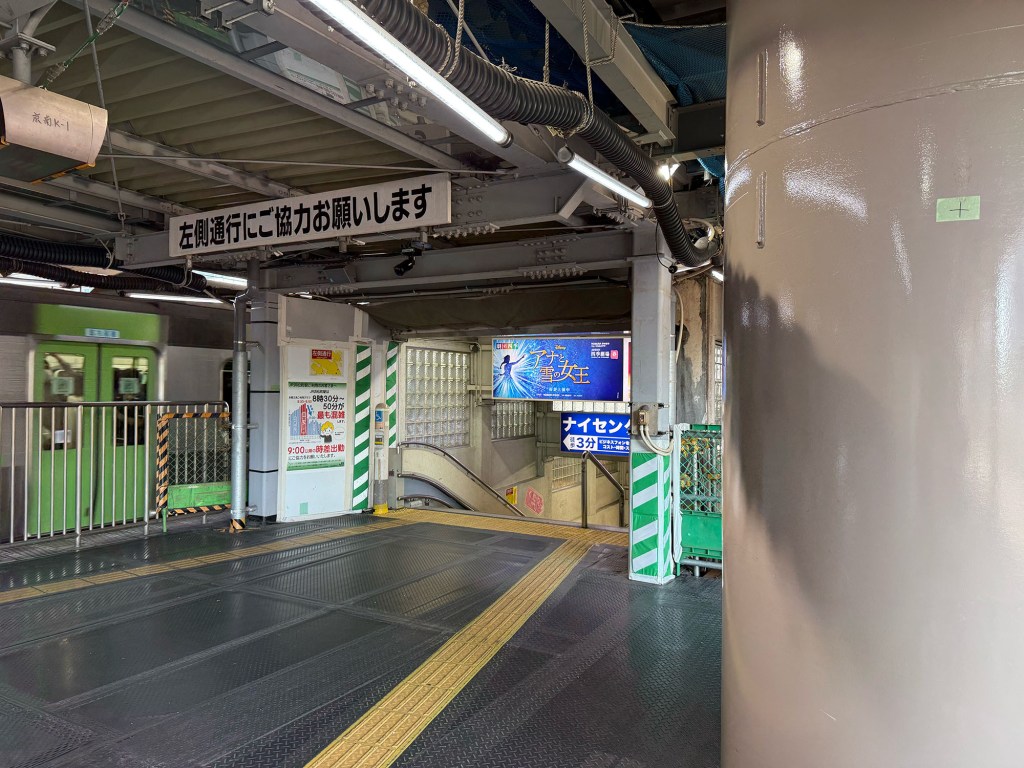
Once you exit through the ticket gate by going down the stairs at the far end of the platform, turn left and head in that direction. You should already be able to see Tokyo Tower from there.
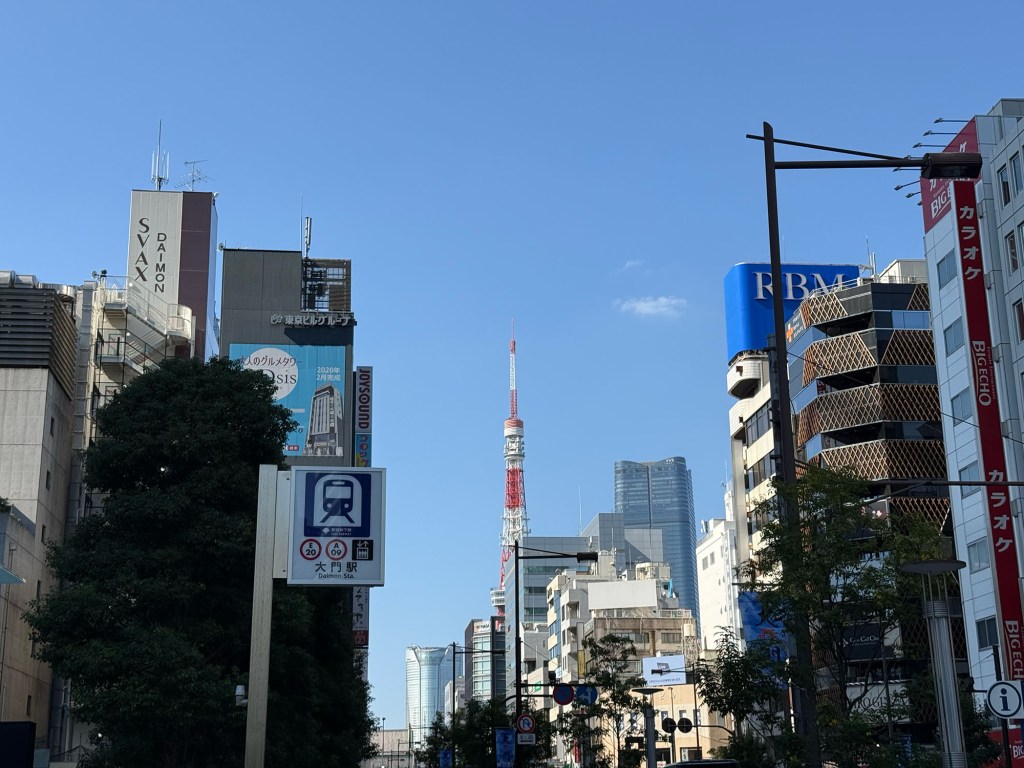
From that point, just walk toward the tower. You’ll pass by Zojoji Temple along the way.
My experience
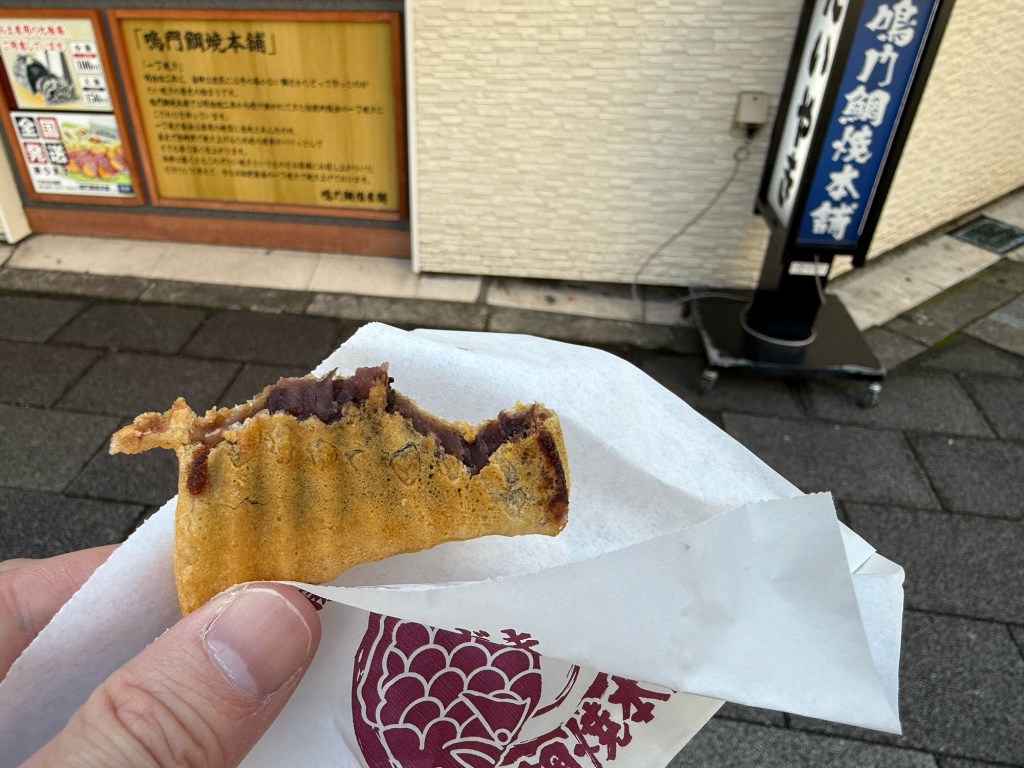
I decided to take the train. From Tokyo Station, I boarded the Keihin-Tohoku Line with its blue-colored train cars and got off at Hamamatsucho. Heading toward Tokyo Tower, visible on the left, I came across a taiyaki shop.
Unlike typical taiyaki shops, this one bakes each taiyaki individually, giving it a crispy crust and generously filled red bean paste that reaches the tail. You can buy taiyaki one at a time.
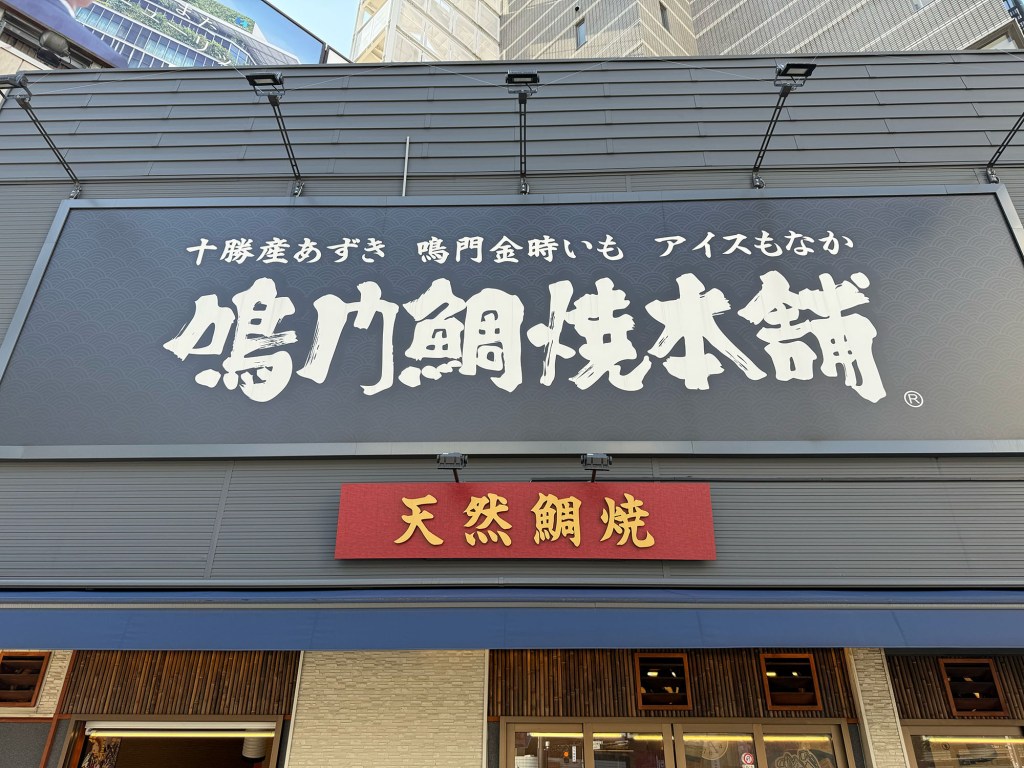
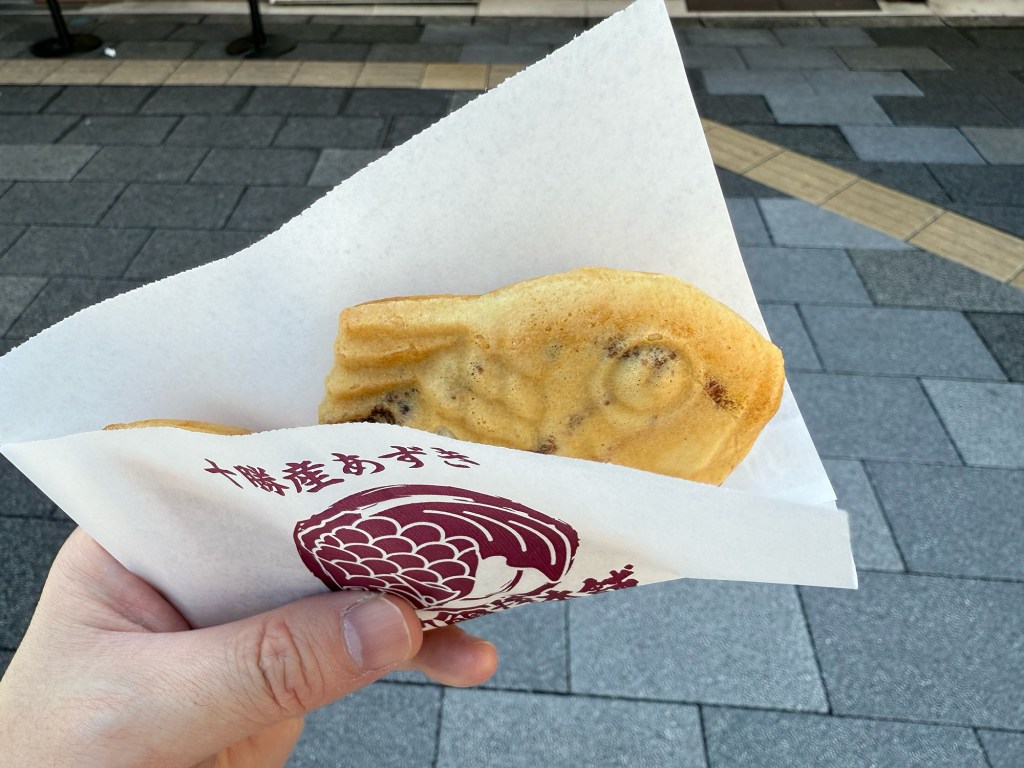
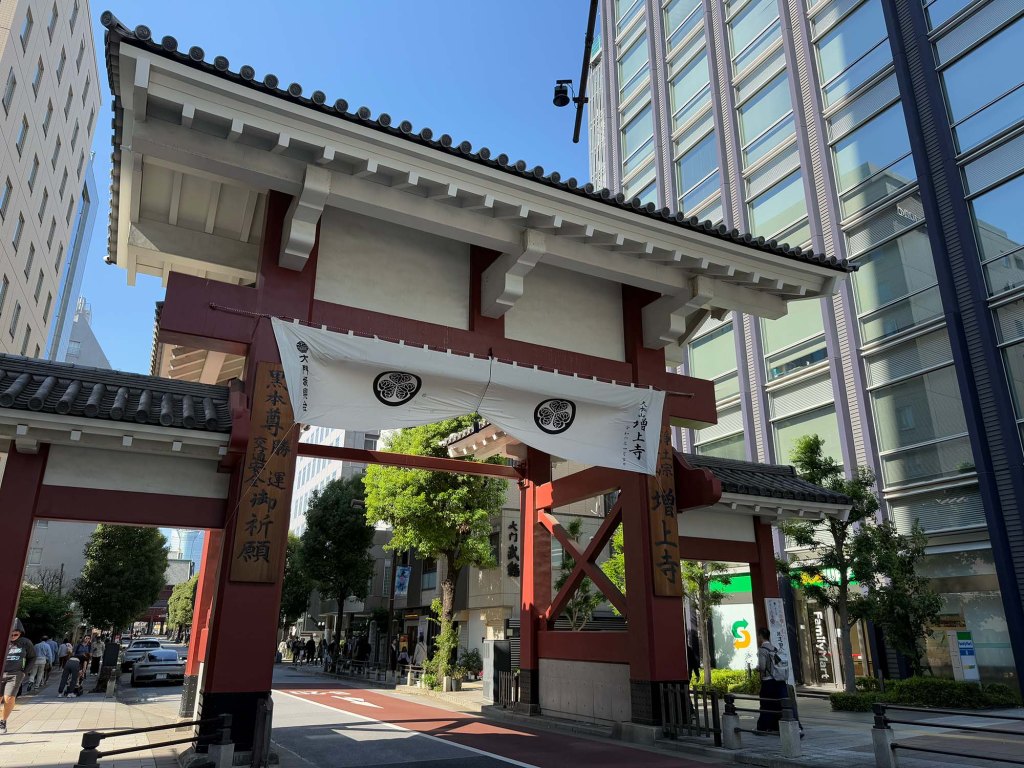
After enjoying a taiyaki, I continued walking. Before long, the grand gate of Zojoji Temple, known as the Daimon, came into view. This large gate is the origin of the local area’s name, Shiba Daimon. It was originally gifted by Tokugawa Ieyasu and was the main gate of Edo Castle. It has since been reconstructed in concrete after being destroyed in air raids during World War II.
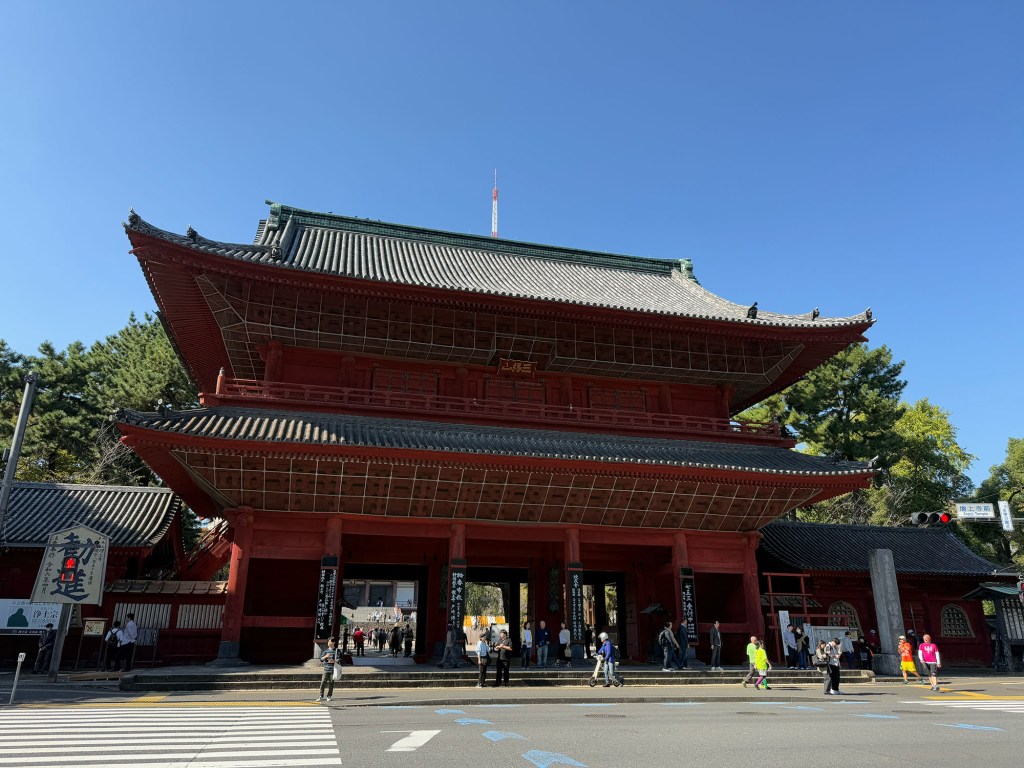
Continuing straight, a large red gate called the Sangedatsumon appears. This gate, designated as an Important Cultural Property, leads to Zojoji Temple’s main hall.
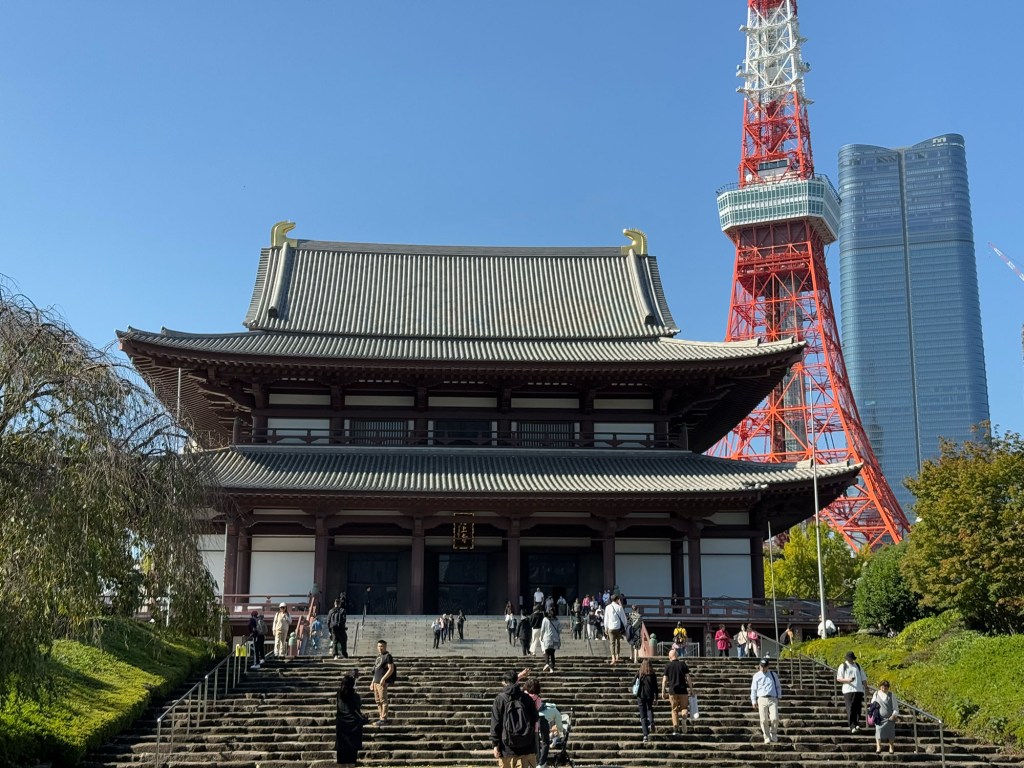
Behind the main hall and to the right, you can see the red Tokyo Tower, allowing you to take in both a historic temple and a modern structure simultaneously. This iconic view even appeared in the video shown at Apple’s WWDC 2015 to celebrate the App Store reaching 100 billion downloads. In Japan, visiting locations where movies, anime, and other visual works were filmed or places that served as their inspiration is called “seichi junrei”(“pilgrimage to sacred sites”).
Heading to Tokyo Tower

Arriving at Tokyo Tower, I headed to the ticket counter to access the observation deck. Near the entrance, the “KOREAN FOOD Fes. In TOKYO TOWER” was taking place, filling the air with delicious aromas. It was hard to resist, but I made my way toward the entrance.
Tokyo Tower has two observation decks: the Main Deck, located on a lower floor, and the Top Deck, located higher up. The Top Deck is accessible only through a special tour, which requires an advance reservation due to limited time slots and capacity.
Since I hadn’t made a reservation, I could only visit the Main Deck. Tickets can be purchased with a credit card.

To reach the Main Deck, you can take the elevator. There’s also a staircase option for the adventurous, but I decided against it. Those who choose the stairs receive a certificate of completion.
I joined a long line and boarded a crowded elevator, reminiscent of Tokyo’s commuter trains, to reach the Main Deck. The Main Deck offers a 360-degree view and features a souvenir shop and a café. The café, however, was a bit pricey.
Since the weather was clear during my visit, I could enjoy the distant views and a stunning blue sky over Tokyo’s cityscape.

On the lower level of the Main Deck, there’s a glass floor that allows visitors to challenge themselves by standing on it. I quietly took a photo instead.

The elevator down is for those leaving, but it was still crowded. Upon descending, we were dropped off on the third floor and guided toward the exit. The route was set up to pass through a shop, which left a strong impression.
 Journey Chronicles