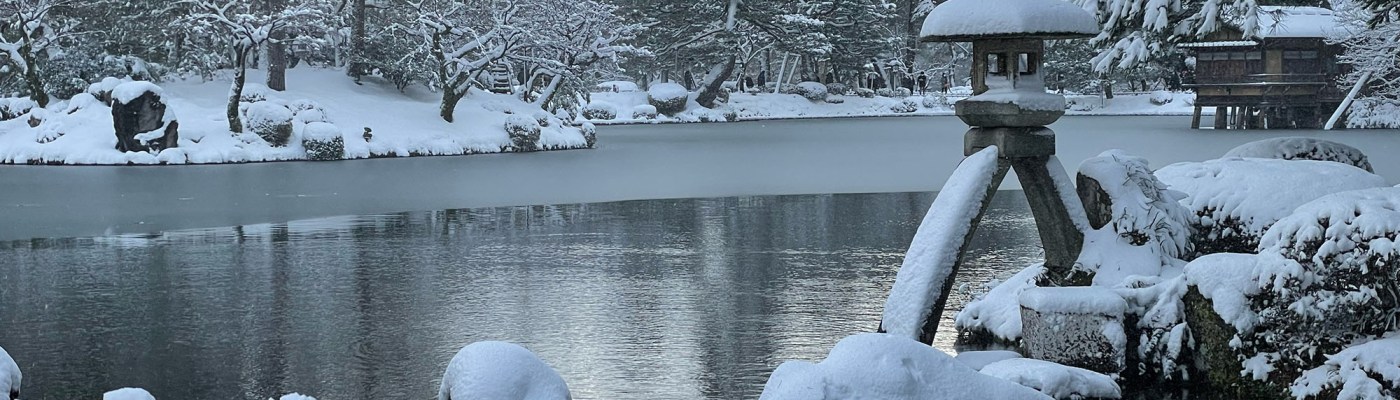
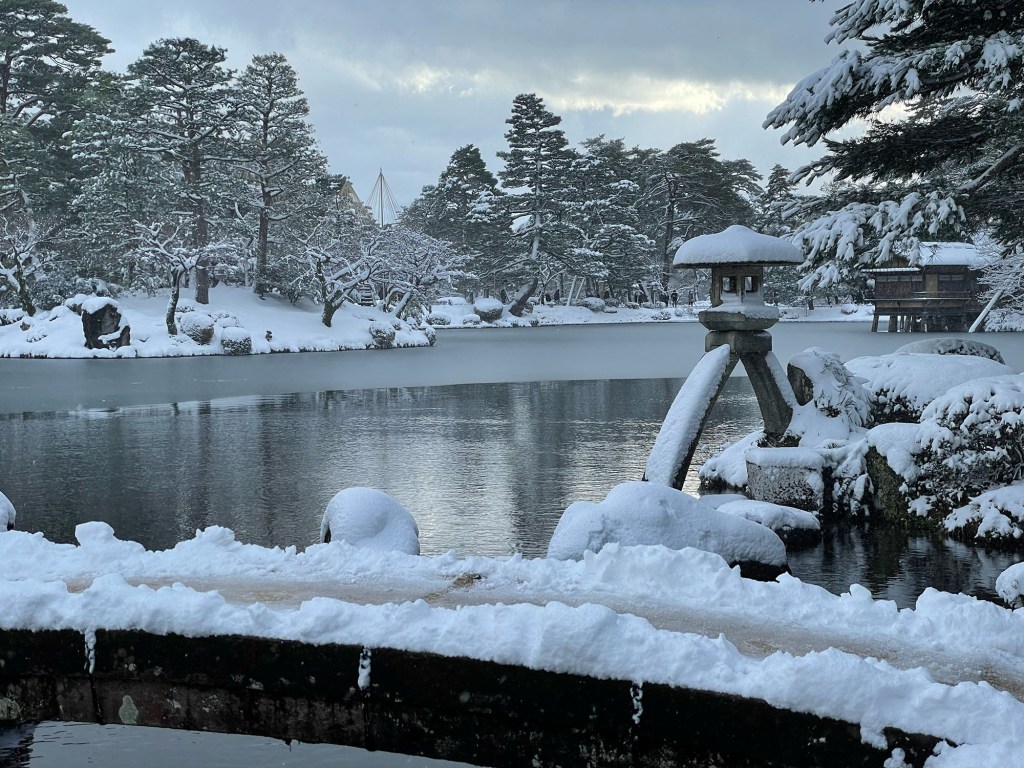
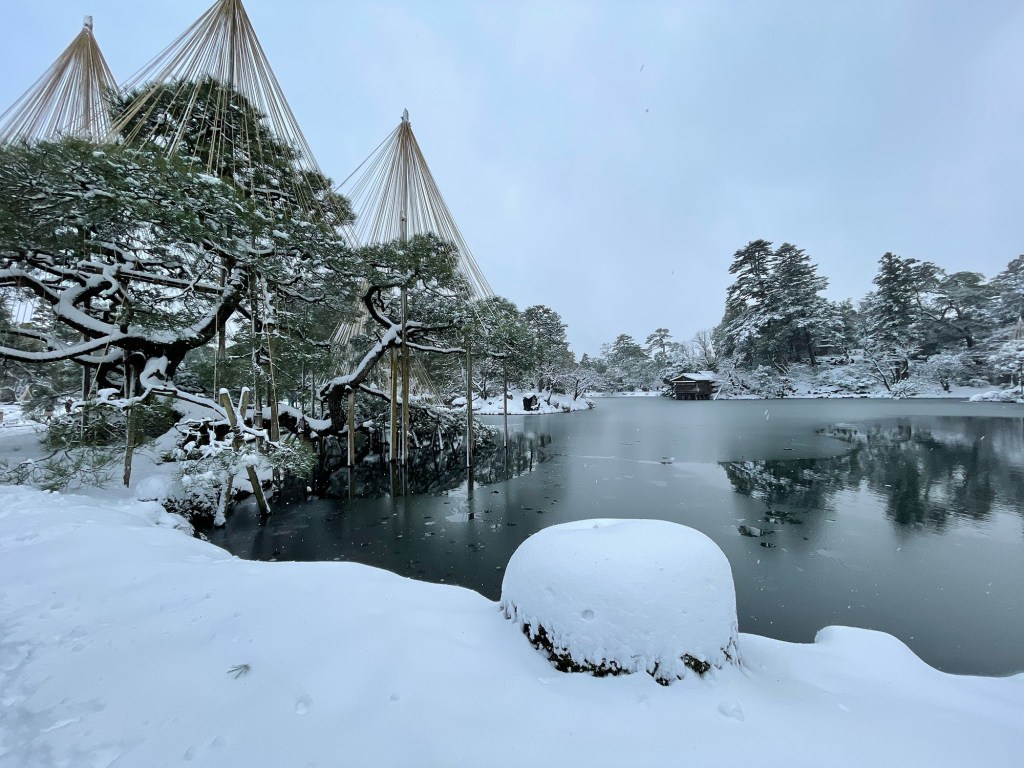
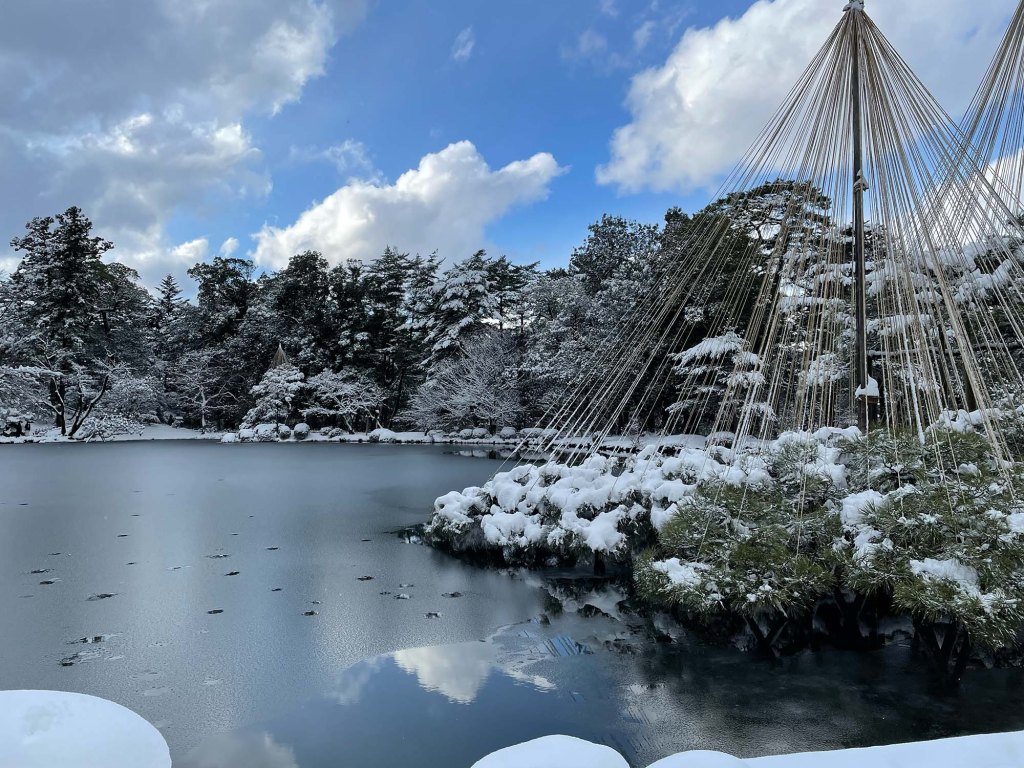
Kanazawa is home to Kenrokuen, a vast Japanese garden. Recognized as a Special Place of Scenic Beauty under the Cultural Properties Protection Act, it is also one of Japan’s Three Great Gardens. The garden is particularly famous for its breathtaking snow-covered scenery.
Access
To reach Kenrokuen, take the Hokuriku Shinkansen from Tokyo Station to Kanazawa Station. The Hokuriku Shinkansen offers two types of trains: the faster “Kagayaki” and the slower “Hakutaka”. If you’re in a hurry, opt for the “Kagayaki”.
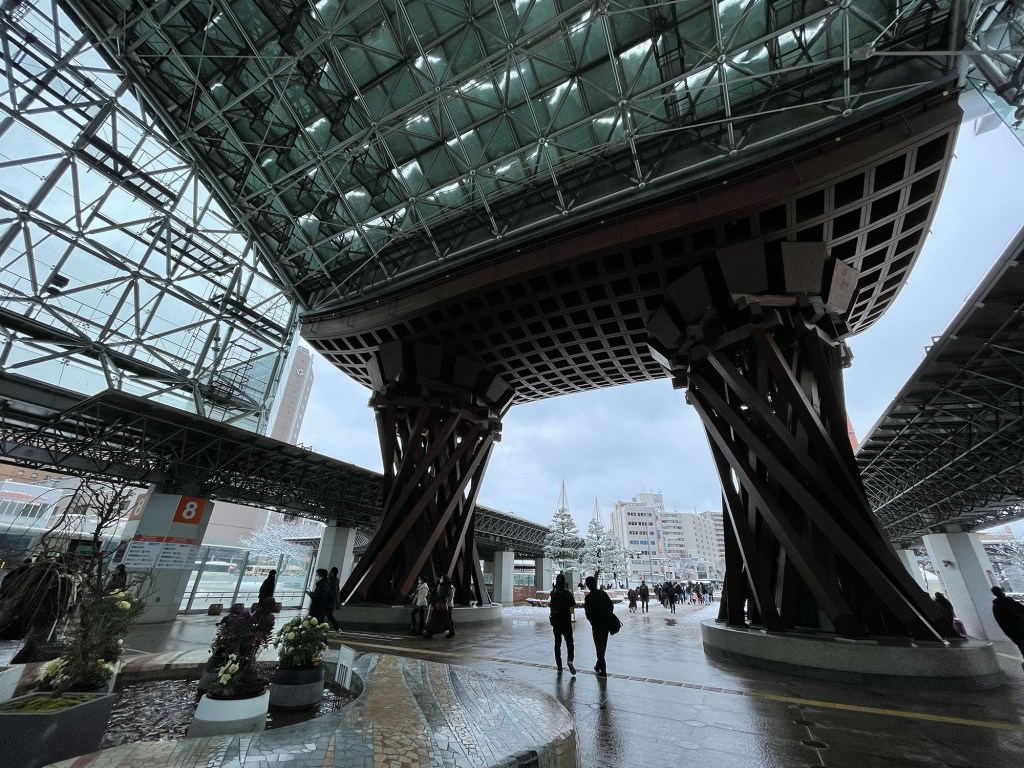
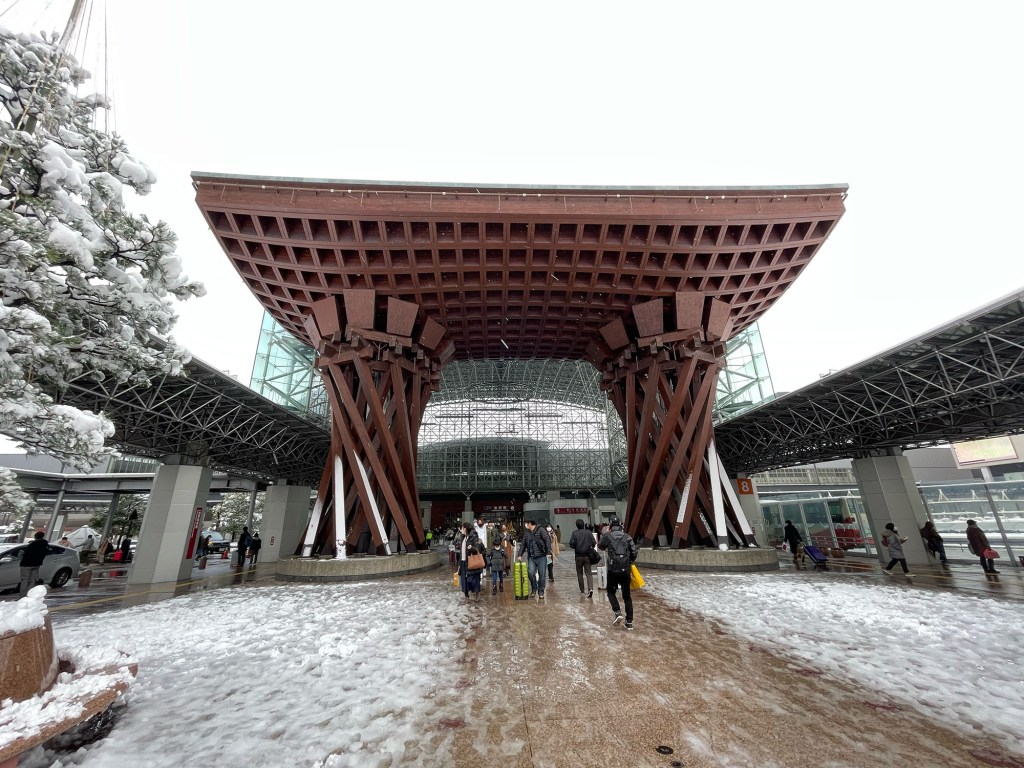
Upon arriving at Kanazawa Station, you’ll be greeted by a large gate called “Tsuzumi-mon”, inspired by the drums used in Noh performances, a traditional art form of the region. At night, the gate is beautifully illuminated.

From Kanazawa Station, you can take a bus from platform 6 or 7 at the East Exit to the Kenrokuen/Kanazawa Castle bus stop. When I visited Kanazawa two years ago, payments were limited to cash or the one-day pass purchasable online. However, from November 1, 2024, to February 28, 2025, a pilot program for cashless bus payments is being conducted. You can now use contactless credit cards or Japan’s IC cards like Suica for payment.
Kenrokuen Garden
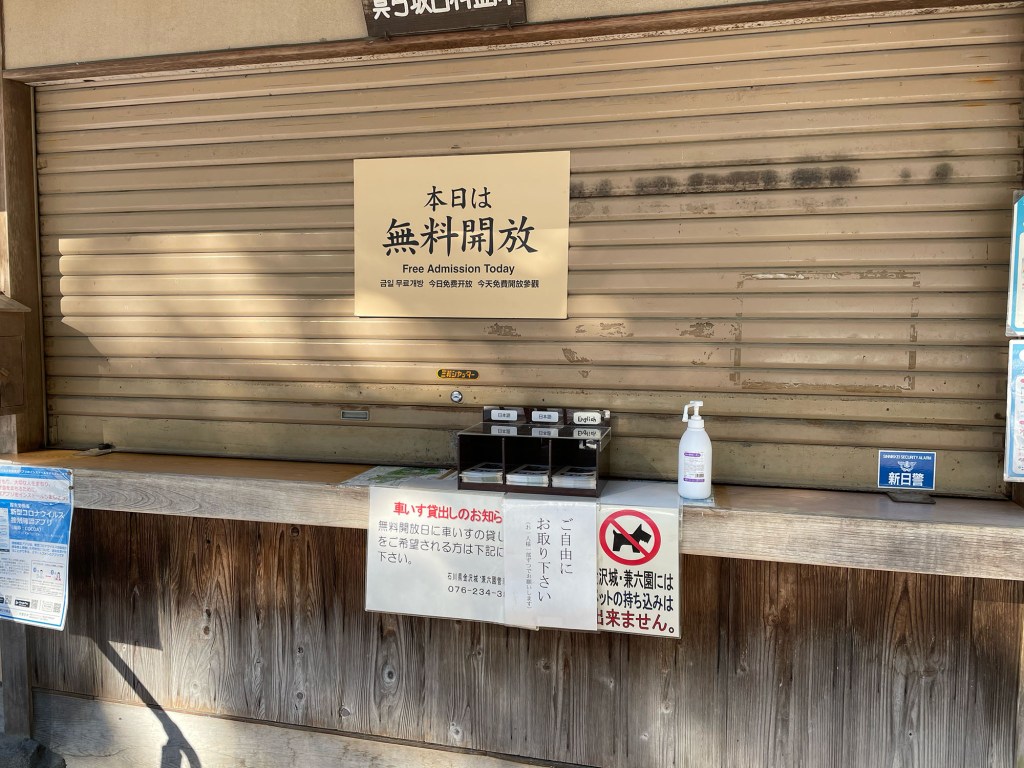
Kenrokuen offers free admission from December 31 to January 3, and it is open for nighttime visits from December 31 to January 1. During winter, you can witness the “yukitsuri”, ropes used to support tree branches to prevent them from breaking under the weight of snow. Kanazawa’s weather is famously unpredictable, as reflected in the local proverb: “Forget your lunch, but never forget your umbrella.” Even a short stay allows you to enjoy the contrast of snowy landscapes and blue skies peeking through the clouds. All the photos below were taken on the same day.
Kanazawa Castle Park
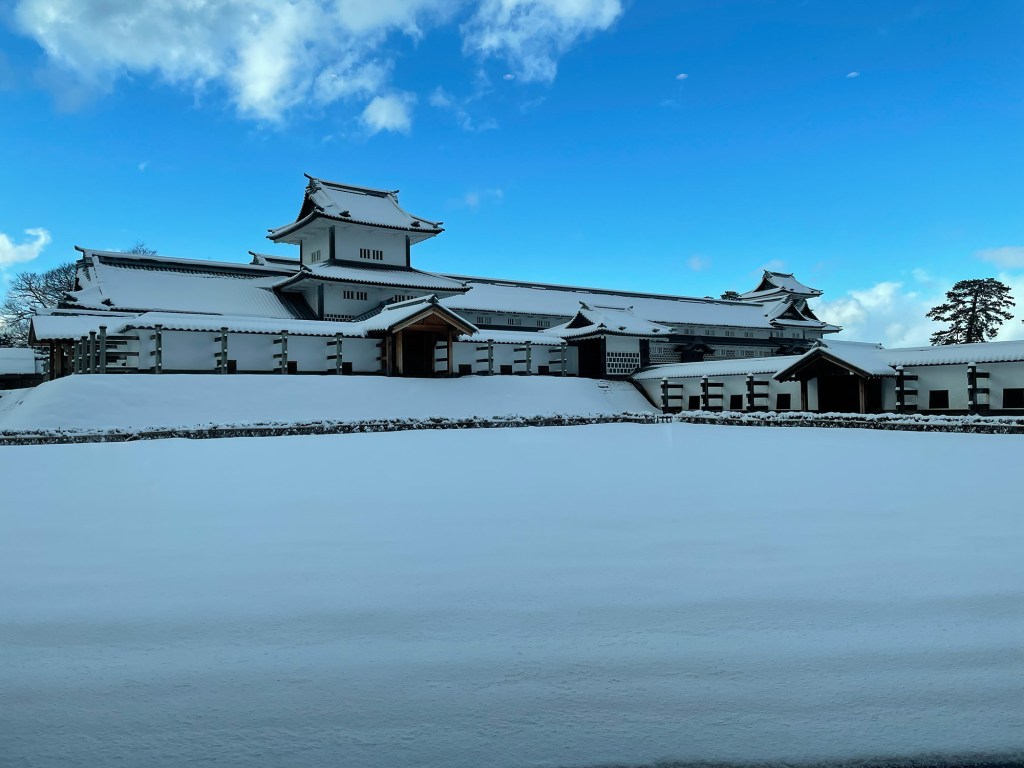
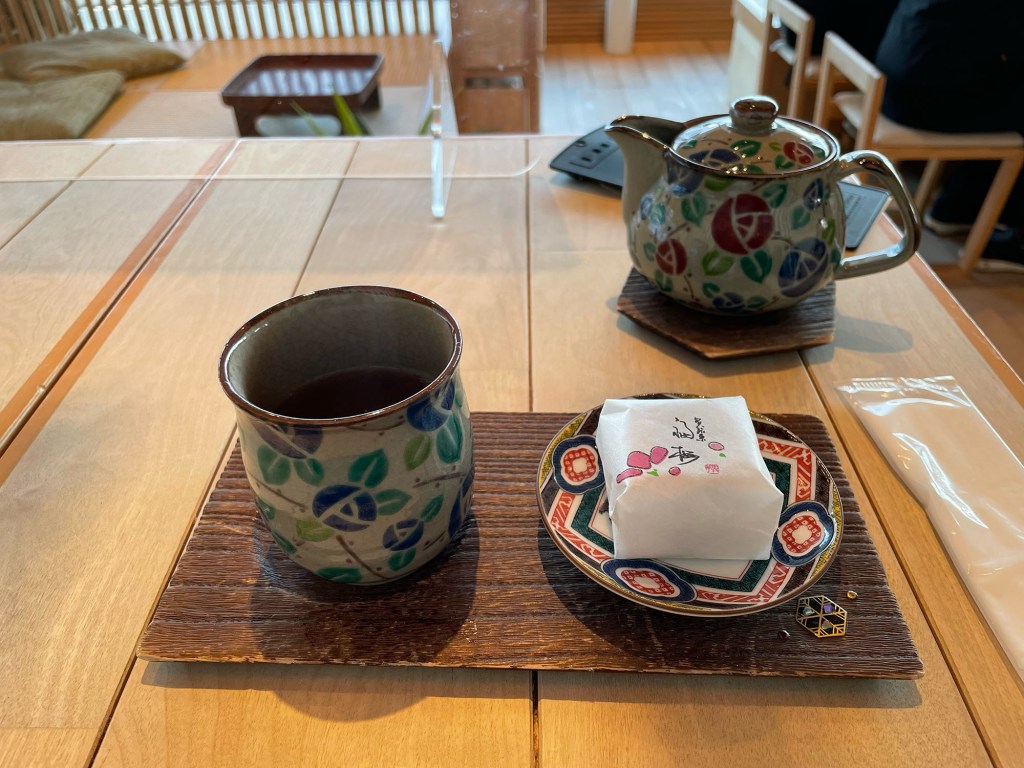
After visiting Kenrokuen, head to Kanazawa Castle Park, located just across the street. The castle dates back to the Sengoku period but also served as the Marunouchi Campus of Kanazawa University from 1949 to 1995. A stone monument commemorating the university’s origins still stands in the park. The on-site café, Mamezara Chaya, is open year-round, and I warmed up there on December 31 during my visit.


Additional Tips
Kanazawa’s roads are equipped with sprinklers to prevent ice from forming, continuously spraying water. Some areas even have water spraying up to knee height, so be mindful to avoid getting wet as you walk.
The 21st Century Museum of Contemporary Art, Kanazawa is famous for its “Swimming Pool,” an installation where you can view the surface of the water from below. However, reservations are required. Be sure to book in advance through the museum’s website. Note that reservations for the “Swimming Pool” and other exhibitions must be made separately.
 Journey Chronicles